
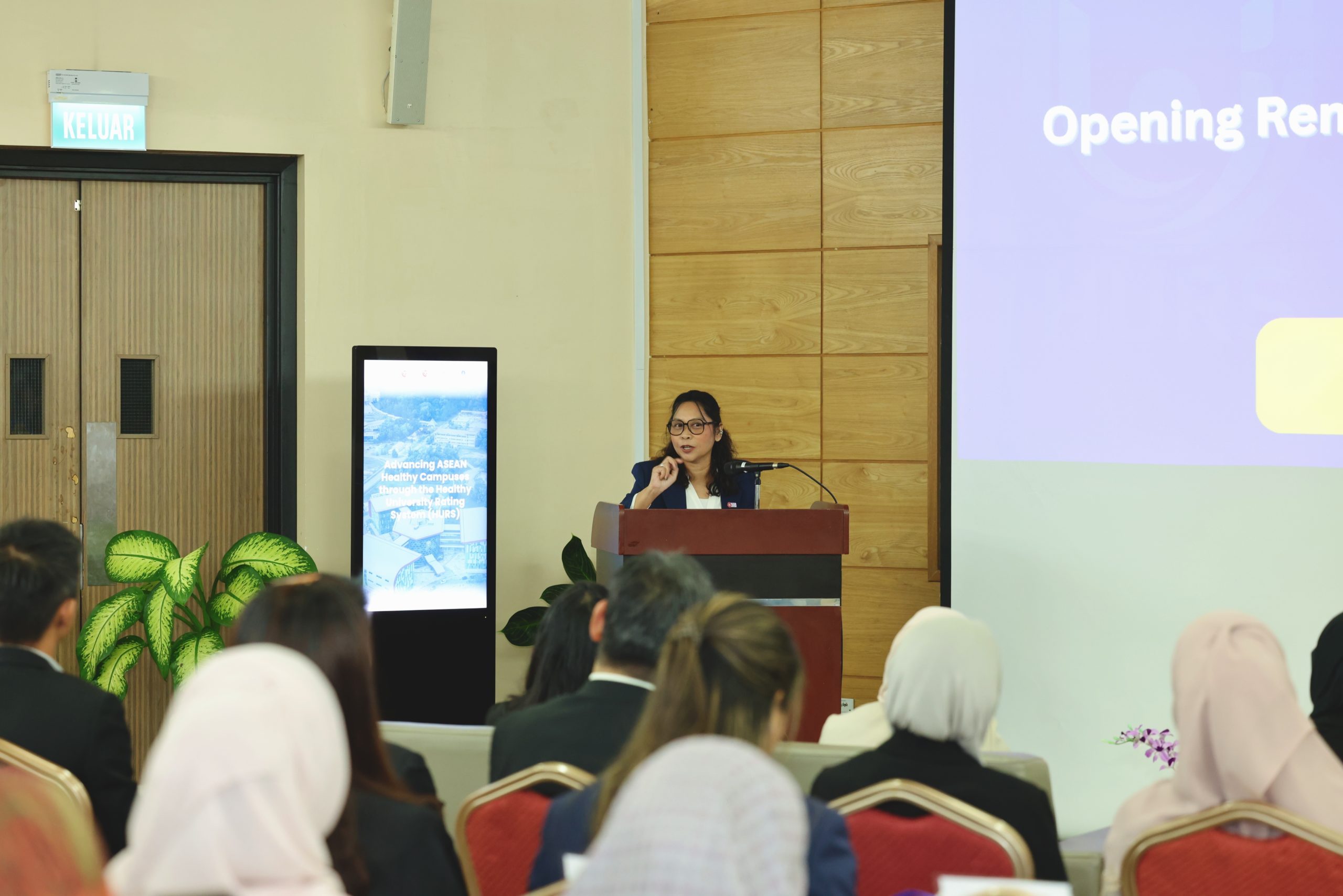
Universiti Brunei Darussalam (UBD) is strengthening its commitment to holistic wellbeing by hosting a regional workshop on the Healthy University Rating System (HURS), bringing together universities and institutions across Brunei Darussalam and the wider Borneo region.
Held from 6th to 7th May 2026 in collaboration with the ASEAN University Network – Health Promotion Network (AUN-HPN) and Mahidol University, Thailand, the workshop positions UBD as a regional platform for advancing healthier, more supportive campus environments.
The workshop brought together participants from across UBD, including members of the UBD Healthy Working Group and relevant staff, as well as representatives from the Ministry of Education, other universities from Brunei Darussalam, higher education institutions including Politeknik Brunei (PB), Institute of Brunei Technical Education (IBTE), and private institutions such as International Graduate Studies (IGS) College, as well as institutions from Sabah and Sarawak, to strengthen regional collaboration and encourage wider participation in the Healthy University Rating System (HURS).
The Healthy University Rating System (HURS) provides a structured way for universities to reflect on and understand these different aspects together. Rather than focusing on ranking or scoring, HURS is intended as a tool for reflection and improvement, helping institutions see how different parts of university life are connected and how they collectively contribute to health and wellbeing.
It also aims to support participating universities in better understanding and applying the Healthy University Framework (HUF), and in preparation for future engagement with HURS through a more structured and evidence-based approach to health promotion.
The workshop reflects a shared aspiration to foster a culture of holistic wellbeing that recognises health in its many dimensions, including physical, mental, emotional, social, spiritual, intellectual, occupational, and environmental wellbeing.
Chairperson of the Healthy University Rating System (HURS) Workshop Dr Mardiah Haji Mahmud pointed out that “HURS is not a competition, but a reflective journey. It is about becoming better than before, not better than others.”
The Healthy University approach focuses on university settings as it is a place where many people spend a significant part of their daily lives. This means that the university environment plays an important role in shaping daily experiences, not only through formal teaching and services, but also through everyday conditions such as the physical environment, social interactions, support systems, safety, sustainability, and overall campus culture. These factors collectively influence how people feel, function, and experience wellbeing in their daily university life.
The two-day workshop also featured key sessions that helped participants understand how Healthy University approaches are supported and developed at different levels. This includes the role of the (AUN-HPN) in strengthening regional collaboration in health promotion policies and practices among universities.
In addition, insights from the Thai Health Promotion Foundation highlighted how national-level support can help translate health promotion strategies into practical actions within university settings.
A key focus was on the HURS framework itself, including its assessment approach, criteria, and use of evidence and best practices. The session helped universities reflect on what is already in place, identify strengths, and consider areas for continuous improvement in a structured and meaningful way. Executive Director of AUN-HPN and Director of ASEAN Institute for Health Development Associate Professor Dr Thunwadee Suksaroj urged universities to “embrace a holistic approach to education that promotes not only academic excellence, but also the health and wellbeing of students and staff.”
Without a connected approach, efforts to support wellbeing may remain spread across different areas of the university. While many initiatives already exist, they may not always be fully aligned or mutually reinforcing. HURS helps bring these elements together more coherently, strengthening collaboration and shared understanding across the institution.
The workshop also provided an opportunity to reflect on how different areas within UBD such as University Life and Governance; Research, Innovation and Sustainability, Industry and Engagement; Global Engagement; and Academic Affairs, collectively contribute to shaping the university experience. Viewed together, these portfolios illustrate the interconnected nature of university operations in supporting health, wellbeing, and a positive campus environment.
The initiative reflects UBD’s ongoing efforts to strengthen its Healthy University agenda, led by the Office of Assistant Vice-Chancellor (University Life and Governance). It also represents an important step in exploring HURS as part of a longer-term institutional direction, focused on building a more connected and supportive university environment.
Through these workshops, UBD will further advance its Healthy University journey, while creating space for dialogue, shared learning, and collaboration among institutions. It is also an opportunity for participants to consider how these approaches may be adapted within their own contexts to strengthen wellbeing for their staff and students.