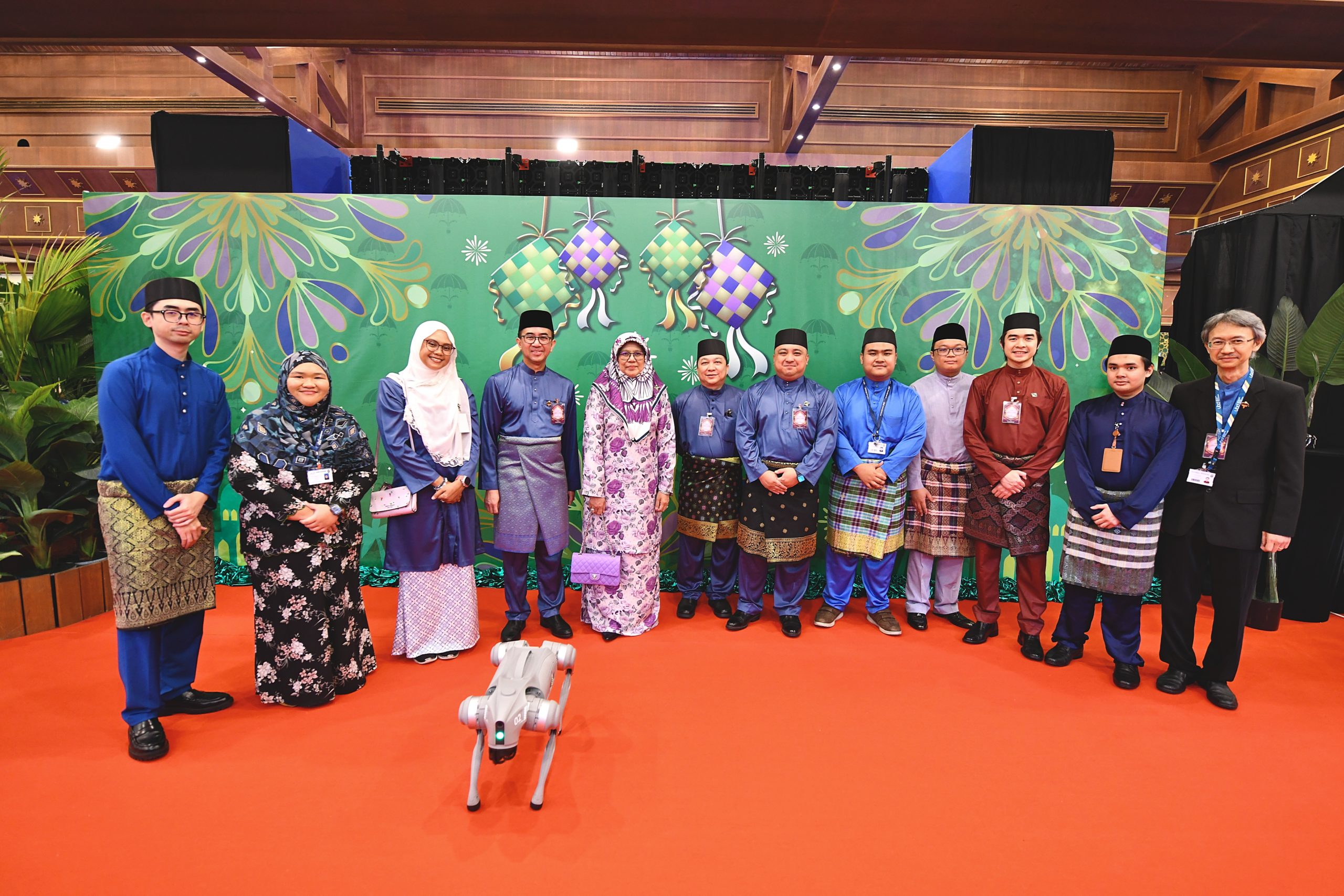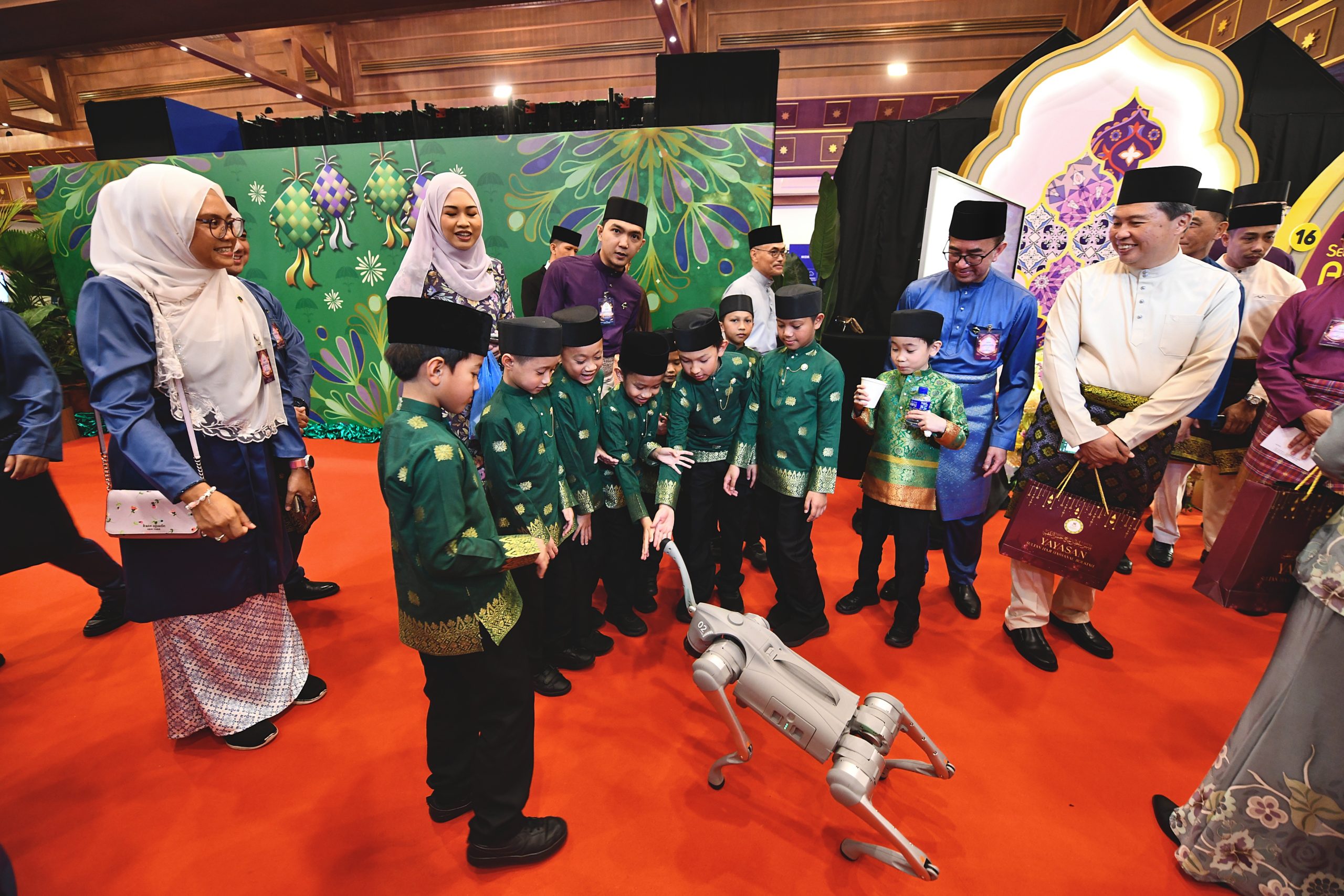
Universiti Brunei Darussalam (UBD) showcased the latest innovations in Artificial Intelligence (AI), by presenting a research project in AI and autonomous robot navigation during the Yayasan Hari Raya Aidilfitri celebration held at the International Convention Centre (ICC) on 4th April 2026.
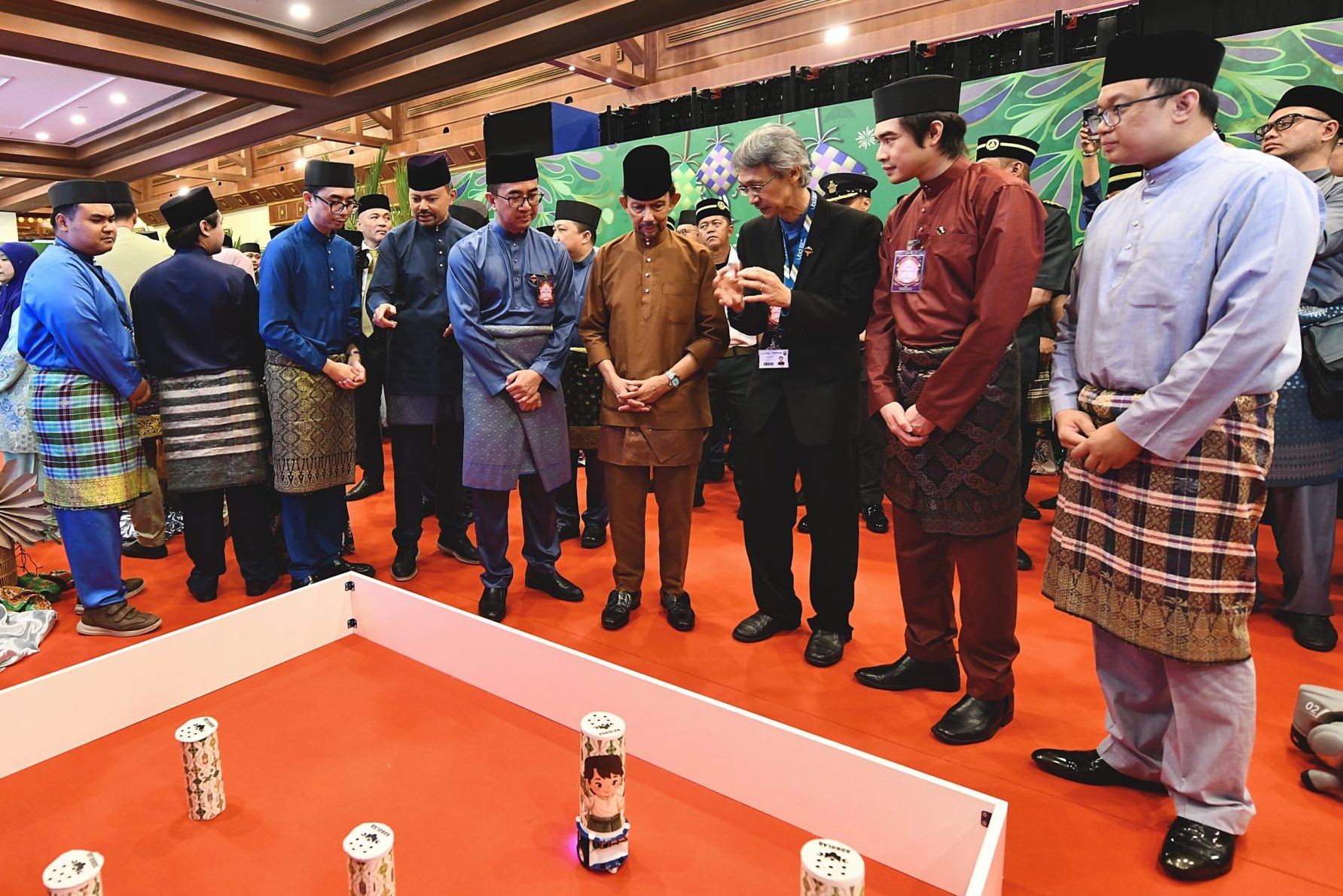
At the special exhibition, His Majesty Sultan Haji Hassanal Bolkiah Mu’izzaddin Waddaulah ibni Al-Marhum Sultan Haji Omar ‘Ali Saifuddien Sa’adul Khairi Waddien, Sultan and Yang Di-Pertuan of Brunei Darussalam, Chancellor of UBD consented to view a live demonstration of a small-scale robot moving autonomously in a simulated space containing obstacles and moving objects.
Accompanying His Majesty were His Royal Highness Prince (Dr.) Haji Al-Muhtadee Billah Ibni His Majesty Sultan Haji Hassanal Bolkiah Mu’izzaddin Waddaulah, the Crown Prince and Senior Minister at the Prime Minister’s Office, Pro-Chancellor of UBD; His Royal Highness Prince ‘Abdul Malik Ibni His Majesty Sultan Haji Hassanal Bolkiah Mu’izzaddin Waddaulah; and His Royal Highness Prince ‘Abdul Mateen Ibni His Majesty Sultan Haji Hassanal Bolkiah Mu’izzaddin Waddaulah.
In line with this year’s theme, ‘AI Innovation as a Catalyst for Societal Development’, and under the ‘Learned and Future-Ready People’ cluster, ‘Robolab’ under the School of Digital Sciences (SDS) highlighted UBD’s role as the nation’s premier educational and research institution in driving technological innovation. The cluster emphasised education, research, and human capital development as the foundation for a knowledgeable and resilient society. Through high-tech research of this nature, UBD continues to contribute to the advancement of knowledge, technological innovation, and societal readiness in facing future technological shifts.
RoboLab is the Robotics and Intelligent Systems Laboratory established within SDS, a research-focused laboratory dedicated to advancing work in artificial intelligence, cyber-physical systems, and robotics. Its overarching mission is to develop technologies that enhance and support human living. The lab is committed to nurturing researchers, particularly local talent, by fostering an environment for conducting world-class research. Through its efforts, RoboLab contributes to technological advancement, especially in artificial intelligence and robotics, while supporting national capacity building in these critical domains.
The group currently comprises nine active researchers at different stages of their academic journey, including PhD candidates, Master’s students, and undergraduate final-year project students. At present, the team consists primarily of local researchers, with a strong commitment to expanding international collaboration and participation in the future. Their research spans a broad range of areas, including robot navigation, robot motion modeling, human activity recognition, human emotion recognition, autonomous driving, and bio-inspired perception.
Research outputs from RoboLab have been presented and accepted at leading international venues such as the IEEE Intelligent Vehicles Symposium (IV; IEEE/RSJ International Conference on Intelligent Robots and Systems (IROS) workshops, IEEE/CVF Conference on Computer Vision and Pattern Recognition (Findings track), and the 16th International Conference on Pattern Recognition Systems (ICPRS).
Beyond research, RoboLab, together with SDS, actively contributes to the nation’s Science, Technology, Engineering, and Mathematics (STEM) ecosystem. The lab regularly organises public workshops and participates in school outreach programmes to promote STEM education and inspire the next generation of innovators.
Aligned with the Aspirations of Wawasan Brunei 2035, UBD plays a crucial role in developing a research and innovation ecosystem that supports a knowledge-based economy and national technological progress. Through various research initiatives in AI and digital technology, the university strives to develop solutions capable of enhancing service system efficiency, environmental safety, and societal well-being. The research into autonomous robotics featured in the exhibition was part of UBD’s efforts to bolster the digital transformation agenda, technological innovation, and the development of smart cities—an increasing necessity in modern environments.
The initiative also aligns with the United Nations Sustainable Development Goals (SDGs), specifically: SDG 9 (Industry, Innovation, and Infrastructure), which emphasises technology and innovation as drivers of economic progress, and SDG 11 (Sustainable Cities and Communities), which focuses on creating safe, inclusive, and resilient urban environments. Furthermore, this research supports the research-led education approach at UBD, where local students and researchers are directly involved in developing AI and robotics technologies with significant real-world application potential.
The flagship project on display at the Yayasan Hari Raya Aidilfitri celebration, ‘Deep Reinforcement Learning (DRL)-based Crowd Navigation for Mobile Robots’, enables robots to navigate autonomously in environments with dense and unpredictable human movement.
Deep Reinforcement Learning is a machine learning approach that allows autonomous systems to learn through interaction with their environment, thereby improving the robot’s ability to make dynamic navigation decisions. This research by PhD student Muhammad Hafiq Haji Anas addresses the primary challenge of robot navigation in human spaces, specifically the difficulty existing systems face when adapting to unpredictable crowd behaviour and high-density environments. To overcome these challenges, the research introduces a risk-perception approach within the robot’s observation space, allowing the robot to assess potential danger levels from the movements of individuals around it. The robot can estimate collision risk levels based on crowd movement, dynamically adjust its path, and move safely through dense and complex environments.
While robot navigation has advanced significantly over the years – from rule-based and reactive methods, to model-based planning, probabilistic approaches, and more recently, learning-based techniques and reliable navigation in dense, dynamic crowds remains a major challenge. Existing approaches often struggle to generalise to unseen pedestrian behaviours and to scale effectively in high-density scenarios.
This research addresses these limitations by incorporating risk perception of moving pedestrians into the navigation process, alongside innovations in the deep reinforcement learning (DRL) pipeline. By enabling robots to better anticipate and respond to complex human behaviours, the system improves both safety and adaptability in real-world environments.
Enhancing the navigation capabilities of autonomous mobile robots will facilitate the broader deployment of service, delivery, and assistive robots in human-centered environments, particularly in public spaces. Ultimately, this contributes to improving daily life and economic productivity, while supporting the development of a safer, more efficient, and sustainable society.
Beyond technological development, this project contributes to the cultivation of human capital in the fields of AI, robotics, and digital technology. By involving students and researchers, they gain practical experience in developing AI algorithms, robotic systems, and technology-based problem-solving.
Through high-impact research in autonomous technology, UBD continues to play a vital role in strengthening knowledge, technological innovation, and the development of competitive human capital.
For more information on programmes and research by SDS, visit https://sds.ubd.edu.bn/.